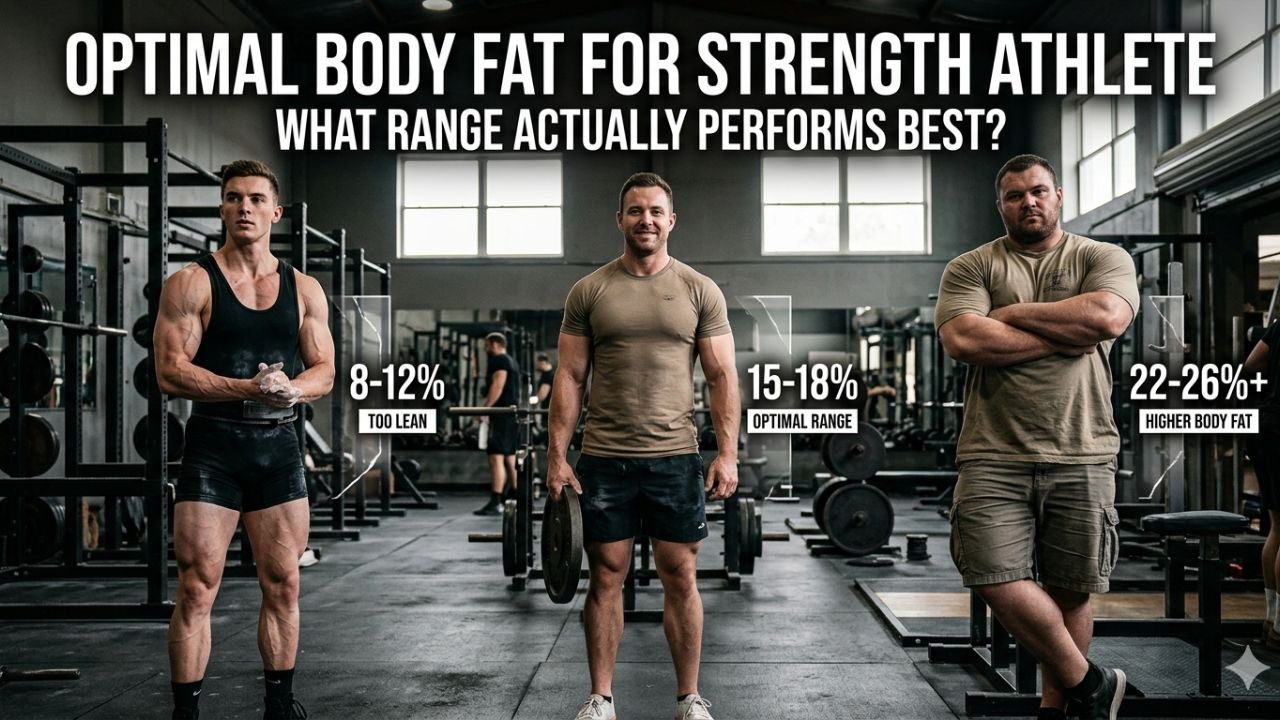
Let me ask you something. Have you ever scrolled through a fitness forum at 11 PM, trying to figure out whether you should be bulking or cutting, and ended up more confused than when you started?
Yeah. Same.
The truth is, body fat percentage is one of the most debated topics in the strength world. Everyone has an opinion. Your gym buddy says stay below 10%. Some Instagram lifter says 15% is “dirty bulking.” Your coach says stop worrying about it and just lift.
So who’s right?
Here’s the thing: there’s no single perfect number for every strength athlete. But there IS an optimal range that can help you perform better, recover faster, and actually look like you train hard. And that’s exactly what we’re breaking down today.
Whether you’re a powerlifter, Olympic weightlifter, strongman competitor, or just someone who takes their strength training seriously, this guide will give you honest, practical answers. No fluff. No bro-science. Just real talk.
Let’s get into it.
What Is Body Fat Percentage and Why Should Strength Athletes Care?
Before we talk about ranges, let’s quickly get on the same page.
Body fat percentage is simply the proportion of your total body weight that comes from fat. So if you weigh 200 pounds and have 30 pounds of fat, your body fat percentage is 15%.
Now here’s why this matters for strength athletes specifically.
Unlike endurance athletes who need to be light and lean for performance, strength athletes have a different relationship with their body composition. More muscle mass generally means more force production. But carrying excess body fat can slow you down, affect hormones, and put unnecessary stress on your joints.
The goal isn’t to be as shredded as a bodybuilder. The goal is to be as strong and functional as possible with enough leanness to support your health and performance long-term.
That’s a very different mindset, and it changes everything about how you should think about body fat.
The General Body Fat Ranges You Should Know
Here’s a simple breakdown by general fitness category, just so we’re all working from the same reference point:
For Men:
- Essential fat: 2–5%
- Athletic: 6–13%
- Fit: 14–17%
- Average: 18–24%
- Above average: 25%+
For Women:
- Essential fat: 10–13%
- Athletic: 14–20%
- Fit: 21–24%
- Average: 25–31%
- Above average: 32%+
Now, where do strength athletes typically fall, and where SHOULD they fall? That’s where it gets interesting.
Body Fat Percentage for Different Types of Strength Athletes
Not all strength sports are the same. A powerlifter and an Olympic weightlifter have very different performance demands. Let’s break it down by sport.
Powerlifters
Powerlifting has weight classes, but within those classes, the goal is maximum force output. Powerlifters often carry more body fat than other strength athletes because:
- More body mass can mean more leverage and stability
- Heavier lifters sometimes have mechanical advantages in certain movements
- Bulking phases are common in the off-season
That said, carrying too much body fat hurts recovery, increases injury risk, and makes weight cuts brutal.
Optimal range for male powerlifters: 12–20% Optimal range for female powerlifters: 20–28%
Many elite powerlifters sit comfortably in this range during competition prep. It’s not about being lean, it’s about being strong and healthy enough to train hard year-round.
Olympic Weightlifters
Olympic lifting is very different. Speed, mobility, and power-to-weight ratio matter a lot here. You need to get under the bar fast. Carrying excess fat limits that explosiveness.
Optimal range for male Olympic weightlifters: 8–14%. Optimal range for female Olympic weightlifters: 16–22%
Elite only lifters tend to be leaner than powerlifters because the sport demands more athletic movement. Think of them as the gymnasts of the strength world.
Strongman/Strongwoman Athletes
Strongman is probably the most forgiving sport when it comes to body fat. Events like Atlas stones, truck pulls, and log presses reward absolute strength and size. Some of the world’s strongest people carry significant body fat and still perform at an elite level.
General range for strongman athletes: 18–30%+, depending on competitive level and body type
However, even in strongman, athletes who are healthier and better conditioned tend to have better careers long-term. Being 30% body fat might not hurt your log press, but it’ll hurt your heart and joints over time.
General Strength Trainees (Recreational)
If you’re not competing and just love lifting heavy, the optimal body fat range is more about health, performance, and feeling good.
Recommended range: 12–18% for men, 20–26% for women
This gives you enough leanness to look fit, move well, feel energetic, and still fuel serious training sessions.
Why Going Too Low Is Also a Problem
Here’s something the fitness industry doesn’t talk about enough: being TOO lean is actually bad for strength performance.
When body fat drops too low, several things happen:
- Testosterone drops. This is huge for strength athletes. Low body fat is directly linked to reduced testosterone, which kills your strength gains and recovery.
- Energy levels crash. Fat is an energy reserve. Depleting it too much leaves you running on empty during heavy training.
- Hormonal disruption, especially for women, dropping too low can cause irregular cycles, bone density loss, and the dreaded “female athlete triad.”
- Immune function suffers. You get sick more often, which means more missed training sessions.
- Mental performance drops. Concentration, mood, and motivation all take a hit when you’re under-fueled.
Real talk: Those shredded 5% body fat guys you see on Instagram? Most of them are not at that level year-round. And when they are, they’re often not performing their best in the gym; they just look great in photos.
Performance and aesthetics are two different goals. Confusing them is one of the most common mistakes strength athletes make.
Why Carrying Too Much Fat Hurts You Too
On the flip side, excess body fat comes with its own set of problems for strength athletes:
- Reduced power-to-weight ratio. You’re moving more mass with every rep, every step, every movement
- Joint stress. Extra fat means extra load on your knees, hips, and lower back
- Cardiovascular inefficiency: Your heart works harder for the same output
- Insulin sensitivity drops. This affects how efficiently your body uses carbs for fuel and recovery
- Inflammation increases Adipose tissue, which releases inflammatory markers that can slow recovery
- Sleep quality declines. Higher body fat is linked to sleep apnea and poor sleep quality.
So yes, it’s a real balancing act. Too lean and you lose hormonal support and energy. Too much fat and you hurt your joints, recovery, and athletic efficiency.
The sweet spot, or optimal range, is where the magic happens.
How to Find YOUR Optimal Body Fat Range
Here’s the truth: optimal body fat is individual. Genetics, training history, sport demands, age, and personal health all play a role.
But here’s a simple framework to figure out YOUR range:
Step 1: Identify your sport and its demands. Are you in a weight-class sport? Do you need to be explosive? Or is raw strength the only thing that matters?
Step 2: Get an accurate measurement. Don’t rely on scale-based body fat estimators; they’re notoriously inaccurate. Better options include:
- DEXA scan (most accurate)
- Hydrostatic weighing
- Bod Pod
- Skinfold calipers with an experienced practitioner
Step 3: Track performance, not just the number. How are your strength numbers? How’s your recovery? How do you feel? These are better performance indicators than a number on a screen.
Step 4: Adjust based on the competition schedule. If you’re peaking for a meet or competition, you might cut slightly. In the off-season, a modest surplus with controlled fat gain makes sense.
Step 5: Work with a coach or sports dietitian. Seriously. A professional who understands your sport will always give you better guidance than generic internet advice.
Practical Tips to Stay in Your Optimal Range
Alright, let’s get practical. Here’s what actually works for strength athletes managing their body composition:
- Eat enough protein. Aim for 0.7–1g per pound of body weight. This protects muscle during fat loss phases and supports growth during surplus phases.
- Don’t fear carbs. Carbohydrates fuel heavy training. Low-carb diets and heavy strength training are a miserable combination for most people.
- Cycle your calories. Higher calories on training days, slightly lower on rest days. This helps manage fat gain while still fueling performance.
- Prioritize sleep seriously. 7–9 hours of quality sleep does more for body composition than most supplements.
- Strength train consistently. More muscle = higher metabolism = easier to stay lean without cutting calories drastically.
- Don’t do extreme cuts. Rapid weight loss costs you muscle. A slow, controlled deficit of 300–500 calories per day is much kinder to your strength and muscle mass.
- Track trends, not daily fluctuations. Your body weight can swing 3–5 pounds in a single day due to water, food, and hormones. Look at 2–4 week trends instead.
- Take progress photos. A photo every 4 weeks tells you more about body composition changes than the scale alone.
The Mental Side: Obsessing Over Body Fat Is Counterproductive
Let’s be real for a second.
A lot of strength athletes, especially newer ones, get way too caught up in chasing a specific body fat percentage. They weigh themselves daily, obsess over food, and tie their self-worth to a number.
That’s not healthy. And it actually hurts performance.
The best strength athletes in the world are focused on what their body can DO, not just what it looks like. They eat to fuel performance. They recover to come back stronger. They compete to test their limits.
Your body fat number is a tool, not a judgment. Use it to inform your training and nutrition. Don’t let it run your life.
If you’re getting stronger, recovering well, feeling healthy, and your sports performance is improving, you’re probably in a good place. Trust the process.
Frequently Asked Questions
Should I cut body fat before starting a serious strength program?
Not necessarily. If you’re a beginner, you can build muscle and lose fat simultaneously, which people call “newbie gains.” Focus on consistent training and good nutrition. The body composition will follow. If you’re significantly overweight and it’s affecting your mobility or health, a moderate cut first can help. But don’t wait until you’re “lean enough” to start lifting. Start now.
Does body fat percentage affect how much I can lift?
Yes and no. Muscle mass is the primary driver of strength. But body fat can affect performance indirectly through hormones, energy levels, movement efficiency, and recovery. Being at an extreme (too lean or too fat) will hurt your numbers more than being in a moderate, healthy range.
How often should I check my body fat percentage?
For most strength athletes, once every 8–12 weeks is plenty. Checking too frequently creates unnecessary anxiety and doesn’t give the data enough time to be meaningful. Focus on weekly averages of body weight and monthly progress photos instead.
Is it possible to be strong and have high body fat?
Absolutely. Many elite strongman competitors carry higher body fat and are among the strongest people on earth. In sports where weight classes don’t apply, and raw force is all that matters, higher body fat doesn’t automatically mean worse performance. However, long-term health is still a factor. Being strong AND metabolically healthy is the real goal.
What’s the fastest way to lower body fat without losing strength?
The most effective approach is a slow, moderate calorie deficit (300–500 calories below maintenance), high protein intake, consistent strength training, and adequate sleep. Avoid crash diets. The faster you lose weight, the more muscle you risk losing with it. Patience wins here.
Conclusion
Here’s what I want you to take away from all of this.
Body fat percentage for strength athletes isn’t about looking like a fitness model. It’s about finding the range where YOU perform best, feel your healthiest, and can sustain your training long-term.
For most male strength athletes, that’s somewhere between 10–20%. For most female strength athletes, it’s roughly 18–28%. The exact number depends on your sport, your goals, and your individual body.
What matters more than the number is how you feel under the bar. Are you recovering well? Are your lifts going up? Are you healthy and energized?
If yes, you’re probably doing just fine.
Stop comparing yourself to the shredded guy on Instagram or the massive powerlifter on YouTube. You’re on your own journey. Learn your body. Fuel it well. Train hard. Rest properly.
The strength you build and the progress you make over years of consistent effort will matter so much more than whatever body fat percentage you hit this month.