What Is a Balanced Diet? Complete Beginner’s Guide
A balanced diet is a way of eating that gives your body the nutrients it needs, in the right amounts, most of the time. It is not a strict diet, a short-term detox, or a list of forbidden foods. It is a pattern built around whole foods, variety, and portions that match your needs. When you eat in a balanced way, you get energy for daily life, nutrients for growth and repair, fiber for digestion, and a steady supply of vitamins and minerals.
Many beginners feel confused about healthy eating because advice changes often and sounds complicated. One week a food is praised, the next week it is blamed. The truth is simpler. Most healthy eating patterns around the world share the same basics: plenty of vegetables and fruits, whole grains, beans and lentils, nuts and seeds, fish and lean proteins, and healthy oils, with less processed food, sugary drinks, and salty snacks. This guide explains those basics in plain language, with practical portions, meal ideas, and habits you can start this week.
This article is for general information only. It is not medical advice, a diagnosis, or a personal meal plan. Nutrition needs vary by age, sex, body size, activity, health conditions, allergies, and culture. Talk to a doctor or a registered dietitian before making major diet changes, especially if you have diabetes, kidney disease, heart disease, food allergies, or take medication that affects diet. Seek urgent care for emergency symptoms such as severe allergic reactions or chest pain.
What a Balanced Diet Really Means
A balanced diet means eating a variety of foods from the main food groups, in proportions that support health, without regularly eating far too much or too little. It is about the overall pattern over days and weeks, not about one perfect meal. One pizza or one salad does not define your diet. What you eat most of the time does.
The main food groups are vegetables, fruits, grains, protein foods, and dairy or fortified alternatives. Each group provides different nutrients, so variety matters. Vegetables and fruits provide fiber, potassium, folate, vitamin C, and many plant compounds. Grains, especially whole grains, provide energy, fiber, and B vitamins. Protein foods, including beans, lentils, fish, poultry, eggs, nuts, and meat, provide protein, iron, zinc, and other nutrients. Dairy foods and fortified alternatives provide calcium, vitamin D, and protein. Healthy oils, in small amounts, provide essential fats and help your body absorb some vitamins.
Balance also means balance between energy in and energy out. If you regularly eat more calories than your body uses, you are likely to gain weight over time. If you regularly eat far fewer calories than you need, you may lose weight, feel tired, and miss nutrients. Most adults do best with regular meals, sensible portions, and foods that keep them full, rather than skipping meals or following very low-calorie plans without medical guidance.
The Plate Method: An Easy Way to Build Meals
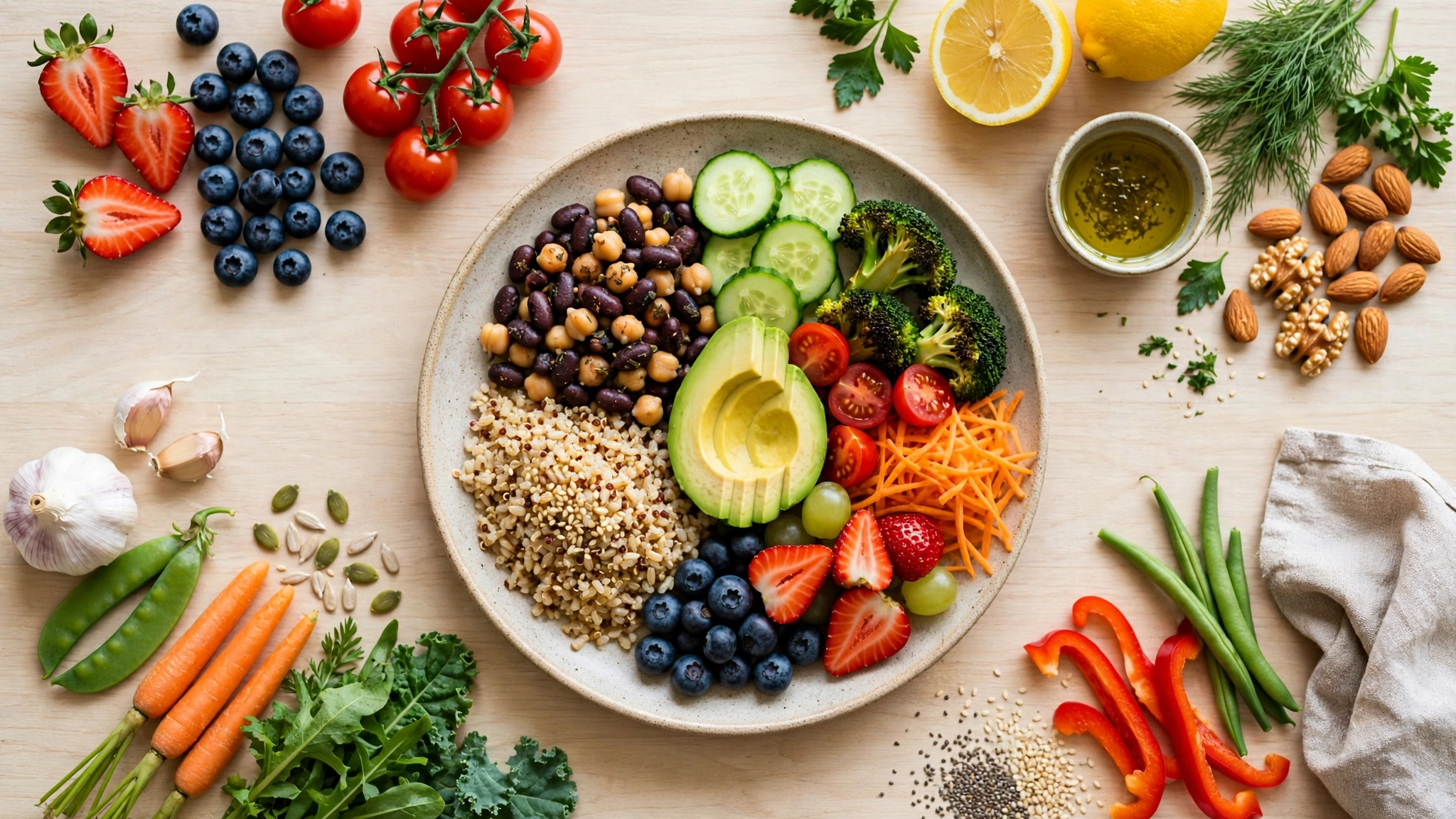
The plate method is one of the simplest tools for balanced eating, and it needs no counting or weighing. Imagine your plate divided into sections. Fill about half your plate with vegetables and fruits, with vegetables taking the larger share. Fill about a quarter with protein foods, such as fish, chicken, beans, lentils, eggs, or tofu. Fill the remaining quarter with whole grains or starchy vegetables, such as brown rice, whole wheat bread, oats, quinoa, potatoes, or sweet potatoes. Add a serving of dairy or a fortified alternative on the side, and drink water.
This method works for lunch and dinner, and it works across many cuisines. A stir-fry with vegetables, chicken, and brown rice fits the plate. A bean and vegetable soup with whole grain bread fits too. A taco plate with beans, vegetables, and a small portion of rice fits as well. You do not need to measure exactly. Use your hand as a rough guide: a palm-sized portion of protein, a fist-sized portion of grains, and two handfuls of vegetables are a useful starting point for many adults.
Vegetables and Fruits: Eat a Rainbow
Vegetables and fruits are the foundation of a balanced diet. They are rich in fiber, water, vitamins, minerals, and plant compounds, and they are usually low in calories for their volume, which helps you feel full without overeating. Aim for a variety of colors, because different colors often mean different nutrients. Dark leafy greens provide folate, calcium, and vitamin K. Orange vegetables such as carrots and sweet potatoes provide vitamin A. Red vegetables and fruits such as tomatoes and berries provide other protective compounds. Aim for at least five servings of vegetables and fruits a day, with more vegetables than fruit.
Fresh, frozen, and canned vegetables can all be part of a healthy diet. Frozen vegetables are picked and frozen quickly, so they keep many nutrients, and they are convenient and affordable. If you buy canned vegetables or beans, choose low-sodium versions and rinse them before use. Choose whole fruit over fruit juice most of the time, because whole fruit provides fiber and is more filling, while juice can be high in sugar and easy to overdrink.
Whole Grains and Fiber
Grains provide energy, and whole grains provide more fiber and nutrients than refined grains. A whole grain contains the bran, germ, and endosperm of the grain, while a refined grain has had the bran and germ removed. That is why whole wheat bread, brown rice, oats, quinoa, barley, and whole grain pasta are usually better choices than white bread, white rice, and many refined cereals and crackers.
Fiber is a key part of a balanced diet. It supports digestion, helps prevent constipation, feeds healthy gut bacteria, helps control blood sugar, and helps you feel full. Most adults in the United States eat less fiber than recommended. General targets are around 25 grams per day for women and 38 grams per day for men, though needs vary. Increase fiber gradually and drink enough water, because a sudden large increase can cause gas and bloating.
Good fiber sources include whole grains, beans, lentils, vegetables, fruits with skins, nuts, and seeds. Try swapping white rice for brown rice, white bread for whole wheat bread, and refined cereal for oatmeal. Add beans or lentils to soups, salads, and tacos a few times a week. Read labels and choose products with whole grain as the first ingredient and at least 3 grams of fiber per serving when you can.
Protein: How Much and Which Kinds
Protein is needed for muscle, skin, hormones, and immune function. Most adults need a moderate amount each day, and the exact amount depends on body size, age, activity, and health. A common general guide is about 0.8 grams of protein per kilogram of body weight per day for most adults, with higher needs for some older adults, athletes, and people recovering from illness. Your doctor or dietitian can help you find your own target. Most people in the United States already eat enough protein, so the bigger question is usually which protein foods you choose.
Choose a variety of protein foods. Fish, especially oily fish such as salmon, sardines, and trout, provides protein and omega-3 fats. Poultry, eggs, beans, lentils, tofu, tempeh, nuts, and seeds are also good choices. Red meat and processed meats such as bacon, sausage, hot dogs, and deli meats are best eaten less often and in smaller portions, because they are often higher in saturated fat and sodium. When you eat meat, choose lean cuts, trim visible fat, and use cooking methods such as grilling, baking, or steaming rather than frying.
Plant proteins have extra benefits. Beans and lentils provide protein plus fiber, iron, folate, and potassium, and they are low in fat and affordable. You do not need to eat meat at every meal to meet protein needs. A day with beans at lunch, eggs at breakfast, and fish or chicken at dinner can easily provide enough protein for many adults. If you follow a vegetarian or vegan diet, plan carefully to include a variety of plant proteins, and talk to a dietitian about vitamin B12, iron, calcium, and vitamin D, which need attention in plant-based diets.
Healthy Fats and Oils
Fat is not the enemy. Your body needs fat for energy, for absorbing vitamins A, D, E, and K, and for brain health. The type of fat matters more than the total amount. Unsaturated fats, found in olive oil, canola oil, avocados, nuts, seeds, and oily fish, are generally healthier choices. Saturated fats, found in butter, cheese, fatty meats, coconut oil, and many baked goods and fried foods, are best limited. Trans fats, found in some processed and fried foods, are best avoided.
Use liquid plant oils for cooking instead of butter or solid fats most of the time. Add a small handful of unsalted nuts or seeds to salads, oatmeal, or yogurt. Eat oily fish twice a week if you can. Limit fried foods, pastries, and highly processed snacks, which are often high in saturated fat, sodium, and added sugar. Portions matter with fats because they are high in calories. A tablespoon of oil, a small handful of nuts, or a quarter of an avocado is usually enough for a meal.
Dairy, Calcium, and Vitamin D
Dairy foods provide calcium, protein, vitamin D, and other nutrients that support bone health. Low-fat or fat-free milk, yogurt, and cheese are good choices for many adults, because they provide the same nutrients with less saturated fat. Fortified plant milks, such as soy, almond, or oat milk with added calcium and vitamin D, can be alternatives if you do not drink dairy, but check the label, because nutrient content varies.
Adults generally need about 1,000 milligrams of calcium per day, with higher needs for some older adults. Good sources include milk, yogurt, cheese, fortified plant milks, leafy greens, canned sardines with bones, and calcium-set tofu. Vitamin D helps your body absorb calcium, and it comes from sunlight, fortified foods, and supplements when needed. Many people in the United States have low vitamin D levels, especially in winter. Talk to your doctor about whether you need a vitamin D test or supplement, rather than taking a high dose on your own.
Water, Drinks, and Added Sugar
Water is the best drink for most people, most of the time. It has no calories, no sugar, and it supports digestion, circulation, and temperature control. How much water you need depends on your size, activity, climate, and health. A common guide is to drink enough that your urine is pale yellow and you rarely feel thirsty. Carry a reusable water bottle, drink water with meals, and choose water over sugary drinks.
Sugary drinks are one of the largest sources of added sugar in the American diet. Soda, sweet tea, energy drinks, sports drinks, and many fruit drinks add calories without helping you feel full, and they are linked with weight gain, tooth decay, and higher blood sugar. Limit them, and choose water, unsweetened tea, or sparkling water instead. Fruit juice, even 100 percent juice, is also high in natural sugar and low in fiber, so limit it to a small glass occasionally, and eat whole fruit instead most of the time.
Added sugar is also found in many foods, including breakfast cereals, flavored yogurt, sauces, baked goods, candy, and desserts. General guidance suggests limiting added sugar to less than 10 percent of daily calories, which is about 50 grams for a 2,000-calorie diet, with lower targets offering more benefit. Read labels, compare products, and choose options with less added sugar when you can. You do not need to give up desserts completely. Enjoy them in smaller portions, less often, and savor them.
Salt, Processed Foods, and Eating Out
Most of the sodium Americans eat comes from processed and restaurant foods, not from the salt shaker. High sodium intake is linked with higher blood pressure for many people. General guidance suggests aiming for less than 2,300 milligrams of sodium per day, with lower targets for many adults with high blood pressure. Check labels, choose lower-sodium versions, rinse canned beans, and cook more meals at home from basic ingredients so you control the salt.
Processed foods are not all unhealthy, but highly processed foods such as chips, cookies, instant noodles, frozen pizza, and processed meats are often high in sodium, saturated fat, added sugar, and calories, and low in fiber and nutrients. They are designed to be easy to overeat. Keep them as occasional foods, not daily staples. When you eat out, choose grilled foods, vegetables, whole grains, and water, ask for sauces on the side, and take half your meal home if portions are large. Restaurant portions in the United States are often much larger than a standard serving.
Meal Planning and Shopping on a Budget
A balanced diet does not need to be expensive. Planning meals, shopping with a list, and cooking at home can save money and improve nutrition at the same time. Start by planning three or four dinners for the week, using foods you already have. Make a shopping list based on that plan, and stick to it. Shop the edges of the store first, where fresh foods are usually found, and buy frozen vegetables, beans, lentils, oats, and whole grains, which are affordable, nutritious, and keep well.
Cook in batches when you can. A large pot of beans, lentil soup, or brown rice can provide several meals. Use leftovers for lunch the next day. Keep a few healthy staples on hand, such as eggs, canned tuna, frozen vegetables, whole grain bread, yogurt, fruit, and nuts, so you always have a balanced meal option. If fresh produce is expensive or out of season, frozen and canned options are good alternatives. Buy seasonal produce when possible, and try farmers markets or store brands for lower prices.
Portions, Hunger, and Mindful Eating
Portion sizes have grown in the United States, and it is easy to eat more than you need without noticing. Use smaller plates, serve food in the kitchen rather than at the table, and pause halfway through a meal to check if you are still hungry. Eat slowly, chew well, and put your fork down between bites. It takes about 20 minutes for your brain to register fullness, so eating slowly helps you stop at a comfortable point.
Learn to notice hunger and fullness cues. Eat when you are moderately hungry, not starving, and stop when you are comfortably full, not stuffed. Avoid eating while distracted by screens, work, or driving, because distraction makes it harder to notice fullness. Keep tempting foods out of easy sight, and keep healthy snacks visible. If you often eat when stressed, bored, or tired, try a short walk, a glass of water, or a few minutes of breathing first, and see if the urge passes.
Common Beginner Mistakes to Avoid
Beginners often make the same few mistakes. The first is trying to change everything at once. A complete diet overhaul is hard to sustain. Change one or two habits at a time, such as adding a vegetable to dinner and drinking water instead of soda, and build from there. The second is following a very strict rule that bans favorite foods completely. Strict bans often lead to cravings and overeating later. It is better to enjoy favorite foods in smaller portions, less often.
The third mistake is trusting fad diets, detoxes, and supplements that promise quick results. Most fad diets are hard to follow, low in nutrients, or based on weak evidence. Detox products are not needed, because your liver and kidneys already remove waste. Supplements are not a substitute for food, and some can interact with medicines. Talk to your doctor before taking supplements. The fourth mistake is focusing only on weight. A balanced diet supports energy, mood, sleep, digestion, and long-term health, not just weight. Focus on habits you can keep, and let weight follow.
A Simple 7-Day Starter Plan
Here is a simple starter plan to show how balanced eating looks in real life. You can repeat it, swap foods you like, and adjust portions to your needs. Day one, breakfast oatmeal with berries and nuts, lunch bean and vegetable soup with whole grain bread, dinner grilled chicken, brown rice, and broccoli. Day two, breakfast yogurt with fruit and whole grain cereal, lunch tuna salad with whole grain crackers and vegetables, dinner lentil curry with brown rice and spinach.
Day three, breakfast whole grain toast with eggs and tomato, lunch leftover lentil curry, dinner baked salmon, quinoa, and green beans. Day four, breakfast smoothie with milk, banana, spinach, and peanut butter, lunch chickpea salad with vegetables, dinner vegetable stir-fry with tofu and brown rice. Day five, breakfast oatmeal with banana and seeds, lunch whole grain wrap with chicken and vegetables, dinner bean tacos with vegetables and a small portion of rice.
Day six, breakfast yogurt with oats and fruit, lunch vegetable soup with beans and whole grain bread, dinner grilled fish, potatoes, and salad. Day seven, breakfast eggs with whole grain toast and fruit, lunch leftover soup or salad, dinner pasta with vegetables, beans, and a small amount of cheese. Drink water with meals, snack on fruit, nuts, or yogurt when hungry, and enjoy a small dessert a few times a week if you like. This plan is an example, not a prescription, and you can adapt it to your budget, culture, and tastes.
Frequently Asked Questions
Do I need to count calories to eat a balanced diet?
No, most people do not need to count calories. The plate method, regular meals, sensible portions, and foods rich in fiber and protein are enough for many adults. Calorie counting can be helpful for some people for a short time, but it can also be stressful and hard to sustain. If you need a personal calorie target for weight loss or a health condition, ask a doctor or registered dietitian.
What is the healthiest diet in the world?
There is no single healthiest diet. Mediterranean, DASH, and other plant-rich patterns are all linked with good health, and they share the same basics: plenty of vegetables, fruits, whole grains, beans, fish, and healthy oils, with less processed food and added sugar. The best diet is the healthy pattern you can enjoy and sustain in your own life and culture.
Are carbs bad for you?
No, carbohydrates are not bad. They are your body’s main energy source. The type matters. Whole grains, fruits, vegetables, and beans provide fiber and nutrients, while refined grains, sugary drinks, and sweets provide mostly calories. Choose whole, fiber-rich carbs most of the time, and limit added sugar and refined grains.
How can I eat healthy if I am busy?
Plan simple meals, cook in batches, keep healthy staples on hand, and use frozen vegetables, canned beans, eggs, and yogurt for quick meals. A balanced meal can be as simple as whole grain toast with eggs and fruit, or yogurt with fruit and nuts. Pack lunch the night before, and keep water and healthy snacks with you.
Do I need supplements on a balanced diet?
Most people can get the nutrients they need from food, with a few exceptions. Vitamin D, vitamin B12 for people who eat little or no animal food, and iron or folic acid in pregnancy are common examples where a supplement may be needed. Talk to your doctor before taking supplements, because needs vary and some supplements can be harmful in high doses.
Conclusion
A balanced diet is simple at its core. Fill half your plate with vegetables and fruits, add a palm-sized portion of protein, a fist-sized portion of whole grains, and a serving of dairy or a fortified alternative. Drink water, limit sugary drinks, salty processed foods, and added sugar, and enjoy a variety of foods most of the time. Start with one or two changes, such as adding vegetables to dinner or swapping soda for water, and build steady habits week by week. You do not need a perfect diet, a fad plan, or expensive foods. You need a pattern you can enjoy, afford, and sustain, one meal at a time. If you have a health condition or specific nutrition needs, work with a doctor or registered dietitian to adapt these ideas to your life.
Disclaimer: This article is for general information only. It is not medical advice, diagnosis, or treatment, and it is not a personal meal plan. Nutrition needs vary by person. Talk to a doctor or a registered dietitian before making major diet changes, starting supplements, or following a weight-loss plan, especially if you have a health condition, food allergies, or take medication. Seek urgent care for emergency symptoms.